House extension ideas: why a modular extension is best
Modular extensions go up in a fraction of the time, for up to a third less — here's why the numbers work.
When people picture extending their home, they picture months of trades, dust and blowouts. A modular (or prefab) extension changes that equation — and for most projects, changes it dramatically.
Speed
A traditional extension can drag on for the better part of a year. A modular extension is measured in weeks: a small, consistent team working to a fixed plan, rather than juggling a rotating cast of contractors across every trade.
Cost
That speed is where the savings come from. Because the build is faster and better-coordinated, a modular extension can cost up to 35% less than a comparable traditional build — while avoiding the very real risk of over-capitalising your block.
Fewer things to go wrong
Traditional builders manage many trades across every project, and every hand-off is a chance for defects and delays. A modular approach compresses that into a tightly-run, largely factory-built process — so quality is more consistent and timelines are more predictable.
The trade-off
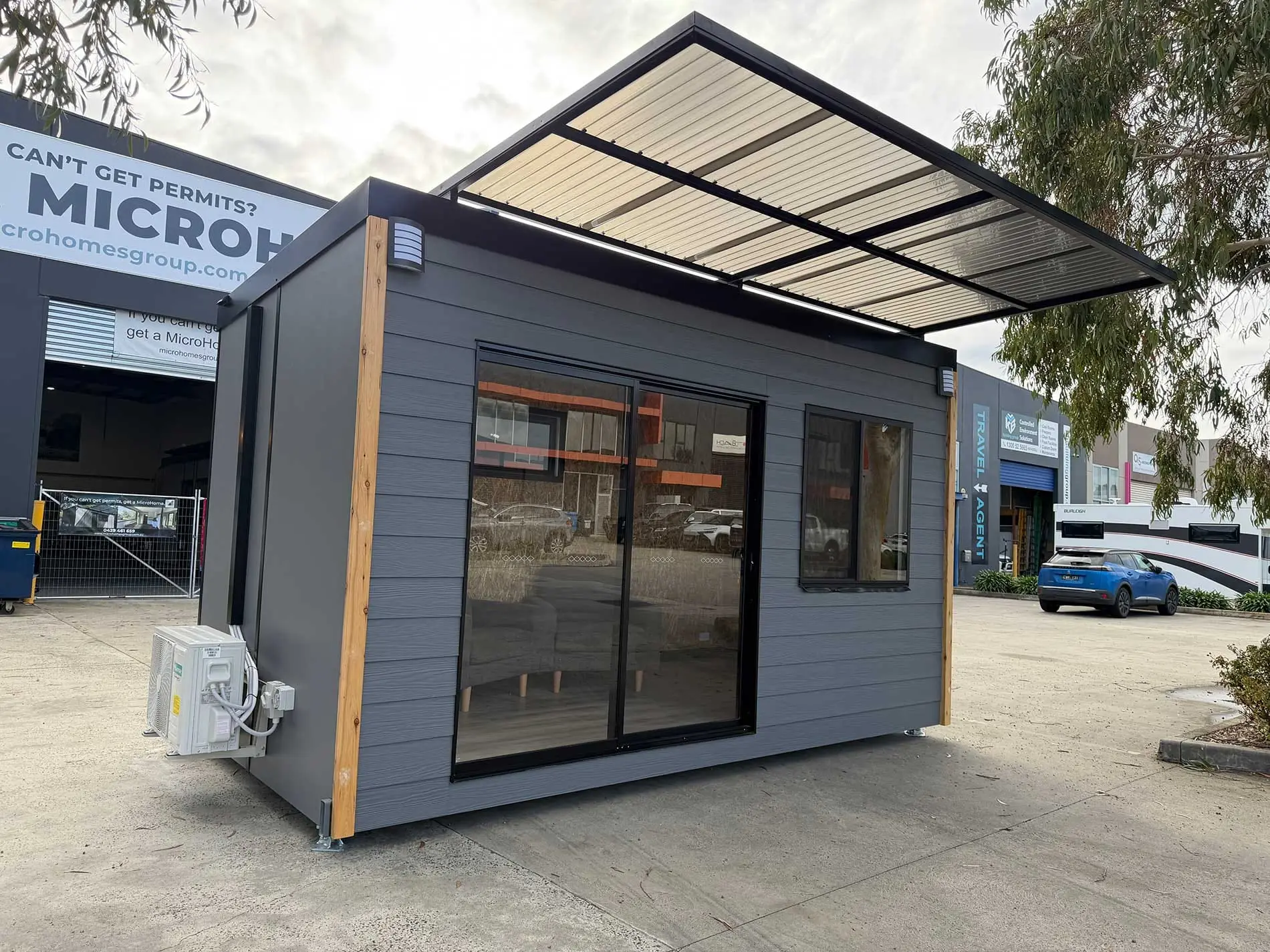
Modular works to engineered panel sizes, so not every one-off custom shape is possible. But for adding genuine, well-built living or working space that blends with your home and adds value, it’s a fast, frugal way to do it — and it’s the same thinking behind every MicroHome.