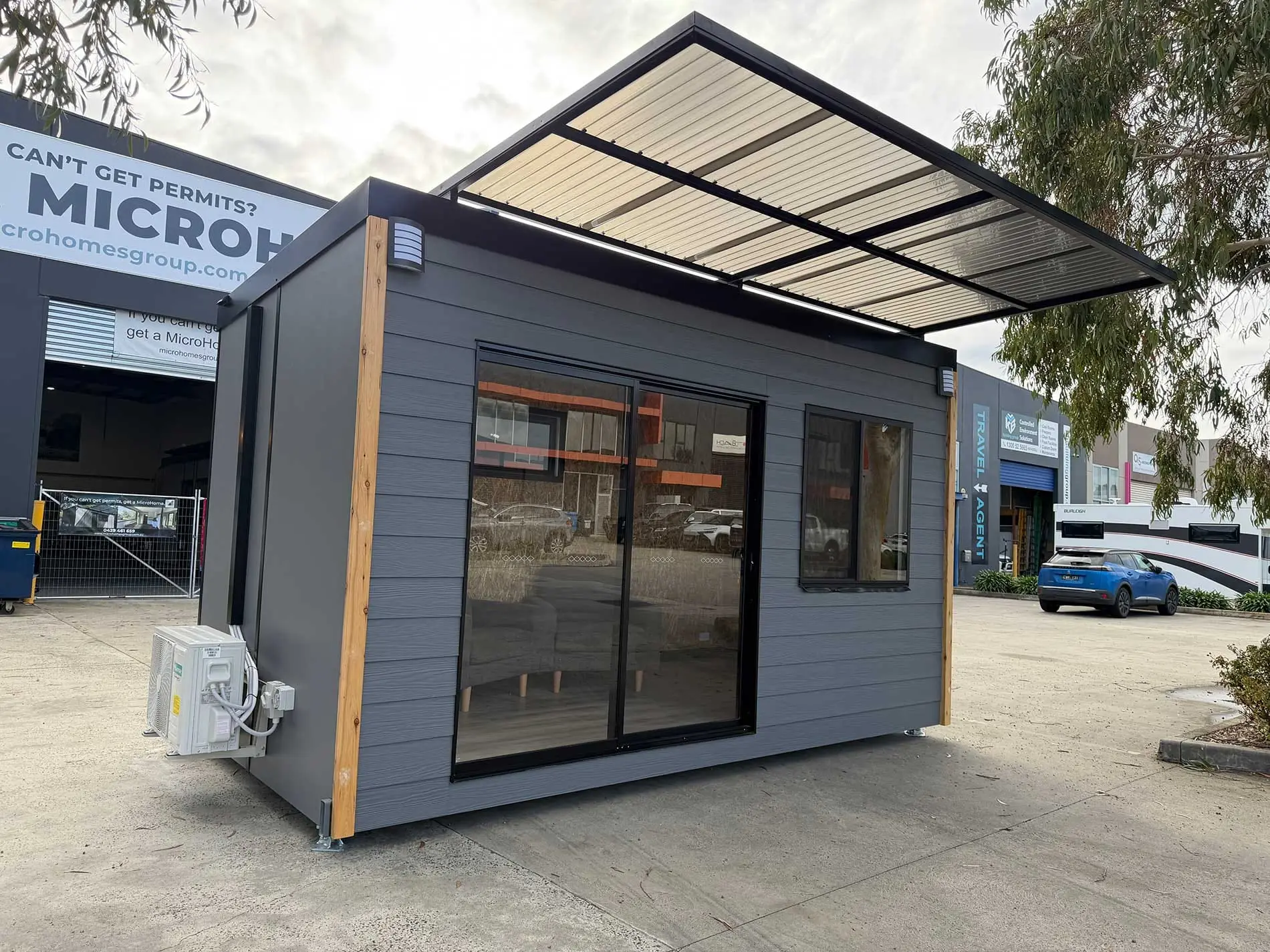

Buying a tiny home in Melbourne: 12 checks before you pay a deposit
The short answer
Before buying a tiny home in Victoria, verify the builder, visit the factory, confirm the home's legal form, check the council position for your address, compare total installed cost, inspect the chassis and construction evidence, test the layout, confirm delivery access, and review services, payment stages, warranty and handover documents.
Last updated 3 October 2026
A tiny home is a large purchase in a category where websites can look more established than the businesses behind them. A good builder should make due diligence easier, not treat it as an insult.
The 12-point buyer checklist
- Visit the factory during a normal working day and meet the people who will build the home.
- Ask for the legal business name, builder registrations and insurance details, and ask what written warranty terms apply.
- Confirm what the home legally is: a fixed building, trailer, caravan or another type of movable dwelling, and ask to see the registration and compliance paperwork that says so.
- Ask your council how the intended use is treated at your specific address. The answer depends on your council and zone, so get it for your property rather than relying on a general statement.
- Request the chassis, registration, engineering and compliance evidence relevant to the model.
- Stand inside a home of the exact width, with a similar layout. Check circulation, bed access, storage and bathroom use.
- Get an itemised quote covering the home, options, delivery basis, installation and exclusions.
- Map site access from the road to the final position, including gates, trees, overhead services, turns and slope.
- Plan power, water, wastewater, stormwater, data and any off-grid systems before finalising the layout.
- Match every payment stage to a visible build milestone and keep the schedule in the contract.
- Ask what happens if the build slot moves, a material changes or the site is not ready.
- List the handover documents, demonstrations, keys, certificates and defect process you will receive.
Three warning signs
- A large deposit is requested before you can visit the workshop or see a comparable completed home.
- The price sounds complete, but delivery, site works and services are not defined.
- Approval language is absolute: “legal anywhere” or “the council cannot stop it”. Whether a home can be placed and lived in is decided by your council and your zone, for your address.
Why width belongs on the checklist
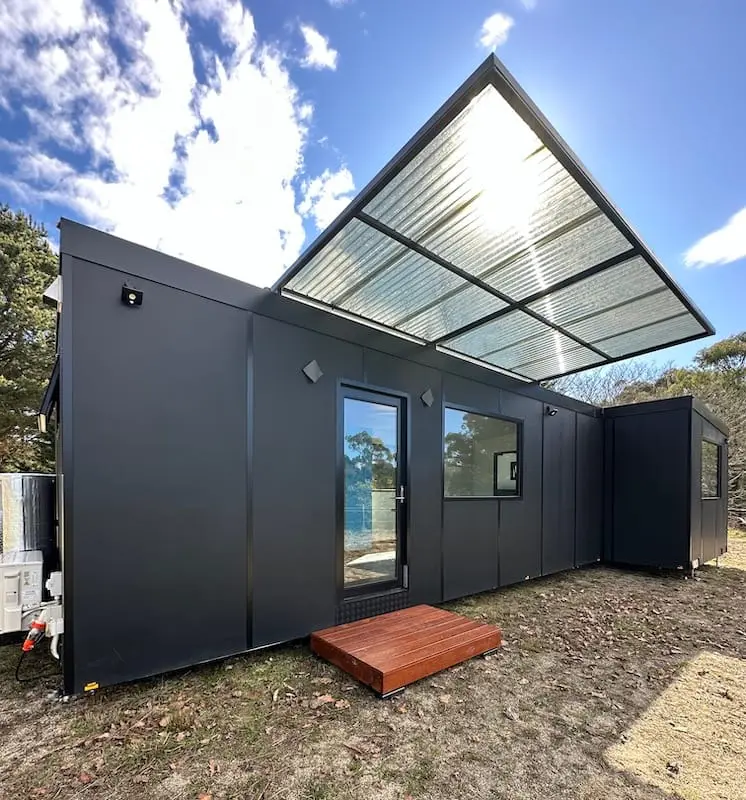
The standard caravan width limit is 2.5 metres. Our Urban homes are 3.2 metres wide and are delivered as an over-dimension load. That adds space for everyday movement, a separate bedroom and a real bathroom, but it also makes route planning and professional delivery important. Compare the lived experience and the delivery method, not only floor area on a plan. And if anyone offers you a home wider than 2.5 metres, ask what it is actually registered as and to see the paperwork; in Victoria ours are registered as caravans under our arrangement with VicRoads and carry their compliance certificate. The 3.2m vs 2.4m comparison sets out the trade-off.
What to bring to a factory visit
- Photos of the site and the access route.
- A rough site plan and gate measurements.
- A list of must-fit furniture.
- Your intended use, and who will live or work there.
- Questions about the council, services, budget and timing.
A useful builder will help you rule things out
The best first meeting may end with a smaller shortlist, a different position on the block or a council question that needs answering. That is progress. The goal is not to leave with a deposit receipt; it is to know whether the home, the builder and the site fit together.
Before you rely on any of this: this is general information, not legal, planning or financial advice. Prices, terms and council positions change; confirm the specifics for your property in writing.