Tiny home council rules in Victoria: what to check before you buy
The short answer
There is no single statewide yes-or-no answer for every tiny home in Victoria. The pathway depends on whether the proposal is a fixed small second dwelling or a movable dwelling, the property's zone and overlays, how the home will be used, and your council's rules. Confirm the position for your address before paying a deposit.
Last updated 3 October 2026
A tiny home can be a practical second home, a downsizer’s home or a guest space. The hard part is that “tiny home” is a marketing description, not a planning category. A fixed building and a home that stays on a registered chassis can be assessed under different rules, and neither label removes the need to check the site.
This page is general information to help you ask better questions. It is not planning advice, and the answer that governs your build is your own council’s, on your own zone.
Start by identifying which pathway you are considering
| Question | Fixed small second dwelling | Movable home on a chassis |
|---|---|---|
| What is it? | A self-contained building of 60m² or less on the same lot as an existing home, under Victoria’s small-second-home rules (confirm the current criteria with your council). | A dwelling that remains movable and is treated under the rules for caravans or movable dwellings. |
| Planning | Often not needed where the Victorian small-second-home criteria are met and no special controls apply — your council and zone confirm this. | Depends on the planning scheme, local laws, how long the home stays, how it is used and your council’s view. |
| Building | A small second dwelling still needs a building permit, and your council or a registered building surveyor can confirm what applies to your site. | Ask a building surveyor whether the setup, services, deck, footings or other works trigger building requirements. |
| Who confirms it? | Your council’s planning team and a registered building surveyor. | Your council’s planning and local-laws teams, with building advice where works are proposed. |
Victoria’s small-second-home reforms made many fixed dwellings of up to 60m² simpler to approve, but they did not create a blanket exemption for every small structure. Flooding, environmental and other special controls can still change the answer for your property. A movable home follows a different pathway again.
The five questions to put to your council
- How is a registered caravan or movable dwelling treated at this address under the planning scheme and local law?
- Can it be occupied, by whom, and for how long?
- Do the zone, overlays, bushfire controls, flooding controls or covenants affect the proposal?
- Do service connections, a deck, steps, footings or other site works require building or plumbing approval?
- What information should be submitted to obtain the answer in writing?
Ask for the answer in writing. Even a written answer can be revisited, so keep the date, the officer’s name and the wording they used.
What to have ready before you call
- Property address and title details.
- A simple site plan showing the proposed position and access route.
- The intended use: family accommodation, full-time residence, home office or short stay.
- How long the home will remain, and whether it will be the only occupied dwelling.
- Dimensions, chassis and registration information for the home you are considering.
- Proposed water, wastewater, power, stormwater, deck and access arrangements.
How MicroHomes approaches the conversation
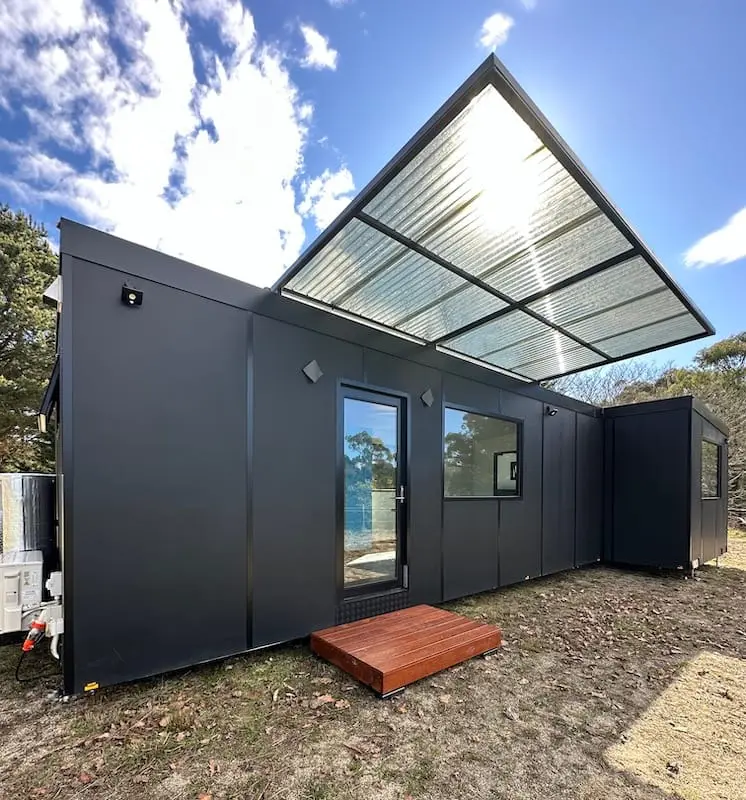
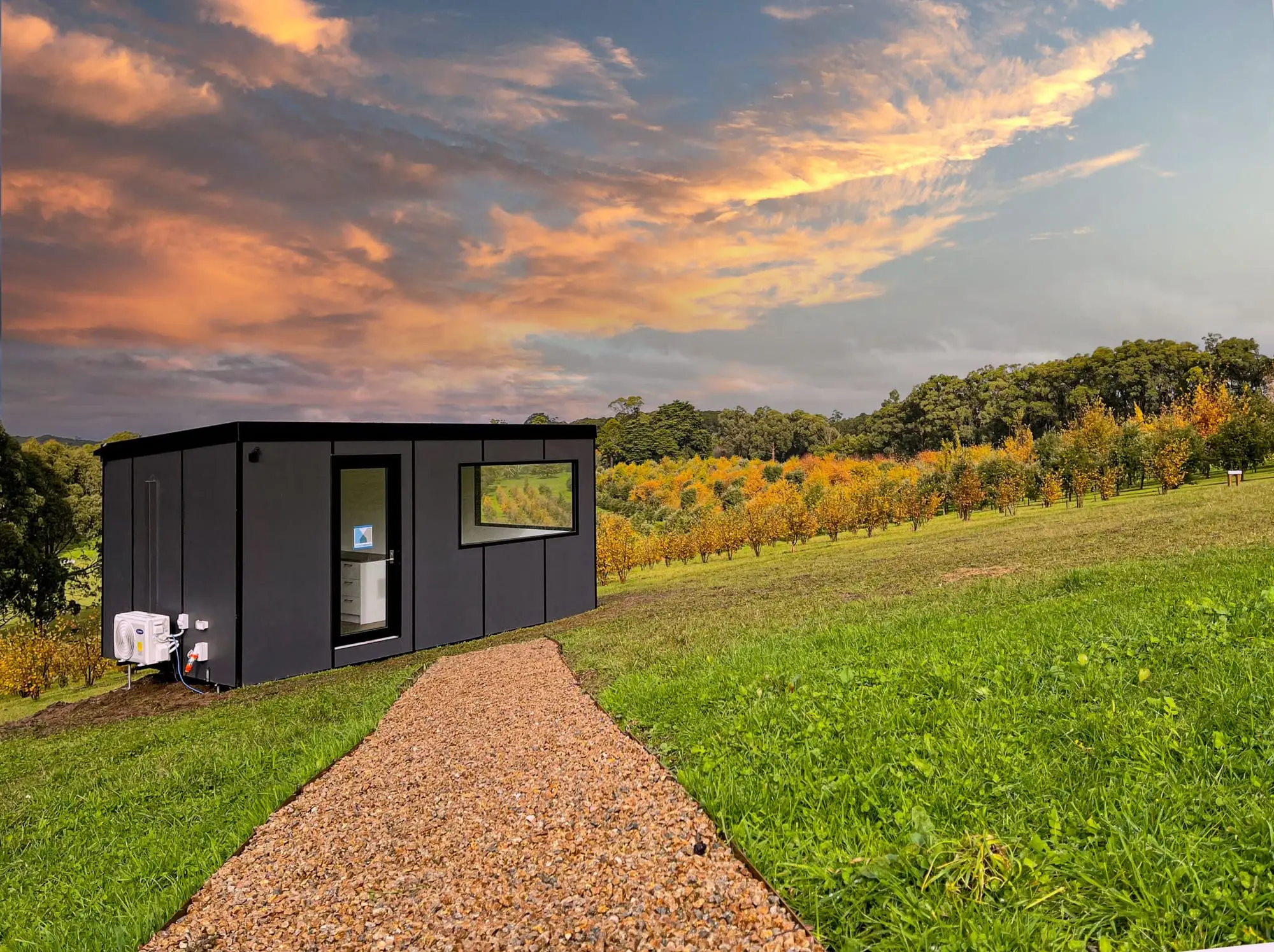
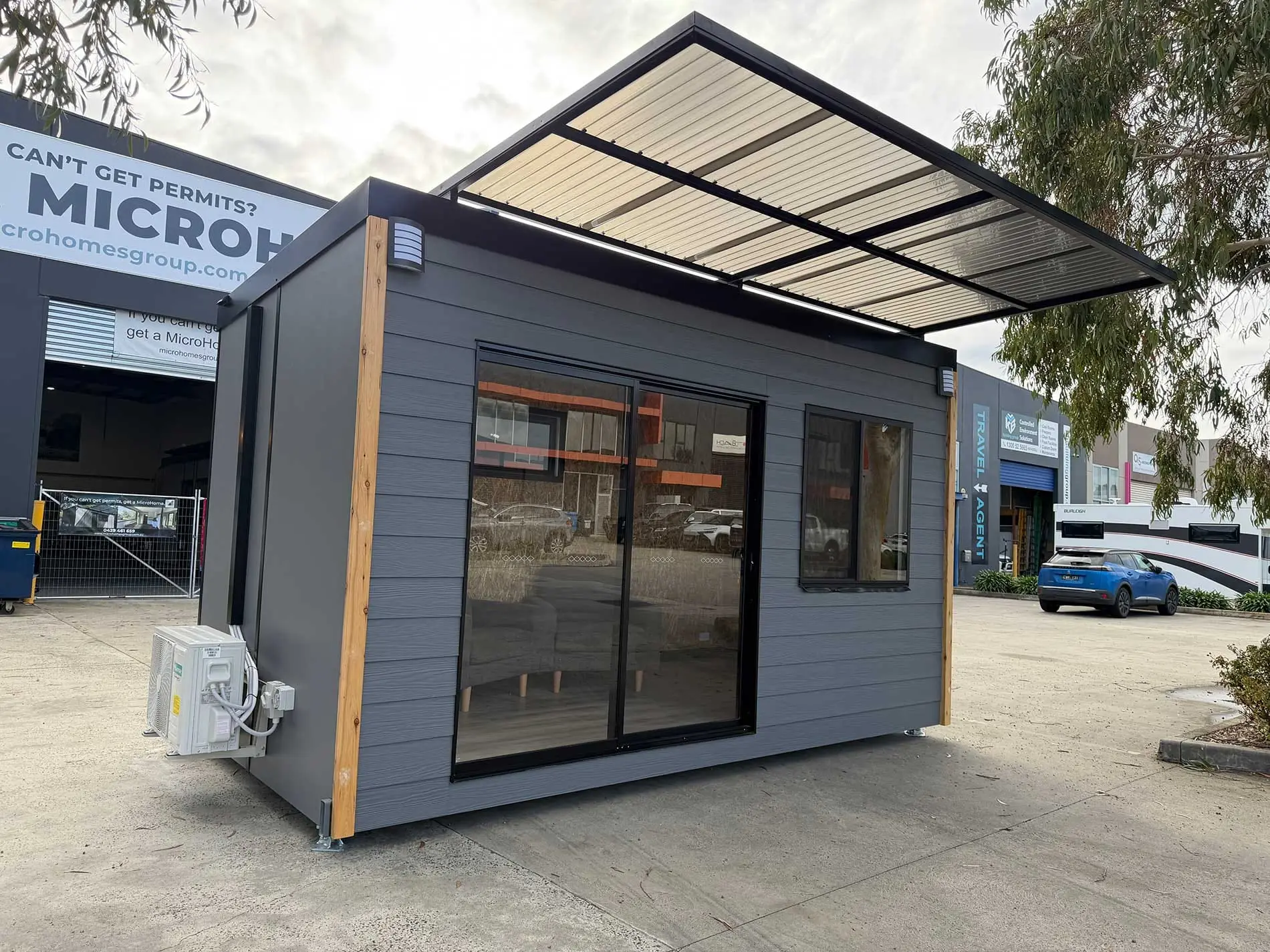
A building is defined under the Building Act 1993 and has to comply with every standard set out in the NCC 2022. Each Urban home, and each module of the Urban Modular, is built as one complete, registered structure that never becomes part of the land. MicroHomes Group has a special arrangement with VicRoads that allows us to register MicroHomes as a caravan (Victoria only). The standard caravan width limit is 2.5 metres and our Urban homes are 3.2 metres wide, so ask any builder of a wider home what it is registered as, and to see the paperwork. Registration as a caravan changes the question you ask your council — from “can I build here?” to “can I keep a caravan here?” — but it does not let us, or any builder, approve a site.
How long you can stay, and whether it can be your only home, are decided by your council and your zone, so they have to be confirmed for your address before you commit.
Waste water is treated the same way: our EasyConnect waste system discharges waste water the way a caravan does, so a MicroHome does not need a direct connection to town sewage — where your council allows a caravan to stay.
What we can do is help you assemble the product and site information, explain what has mattered on comparable projects, and tell you what to ask. If the answer for your intended use looks like a no, the right time to learn that is before you commit.
Before you rely on any of this: planning rules and council local laws change and vary by location. Treat this page as a starting point, not legal or planning advice, and confirm the specifics for your property with your council and a registered building surveyor.