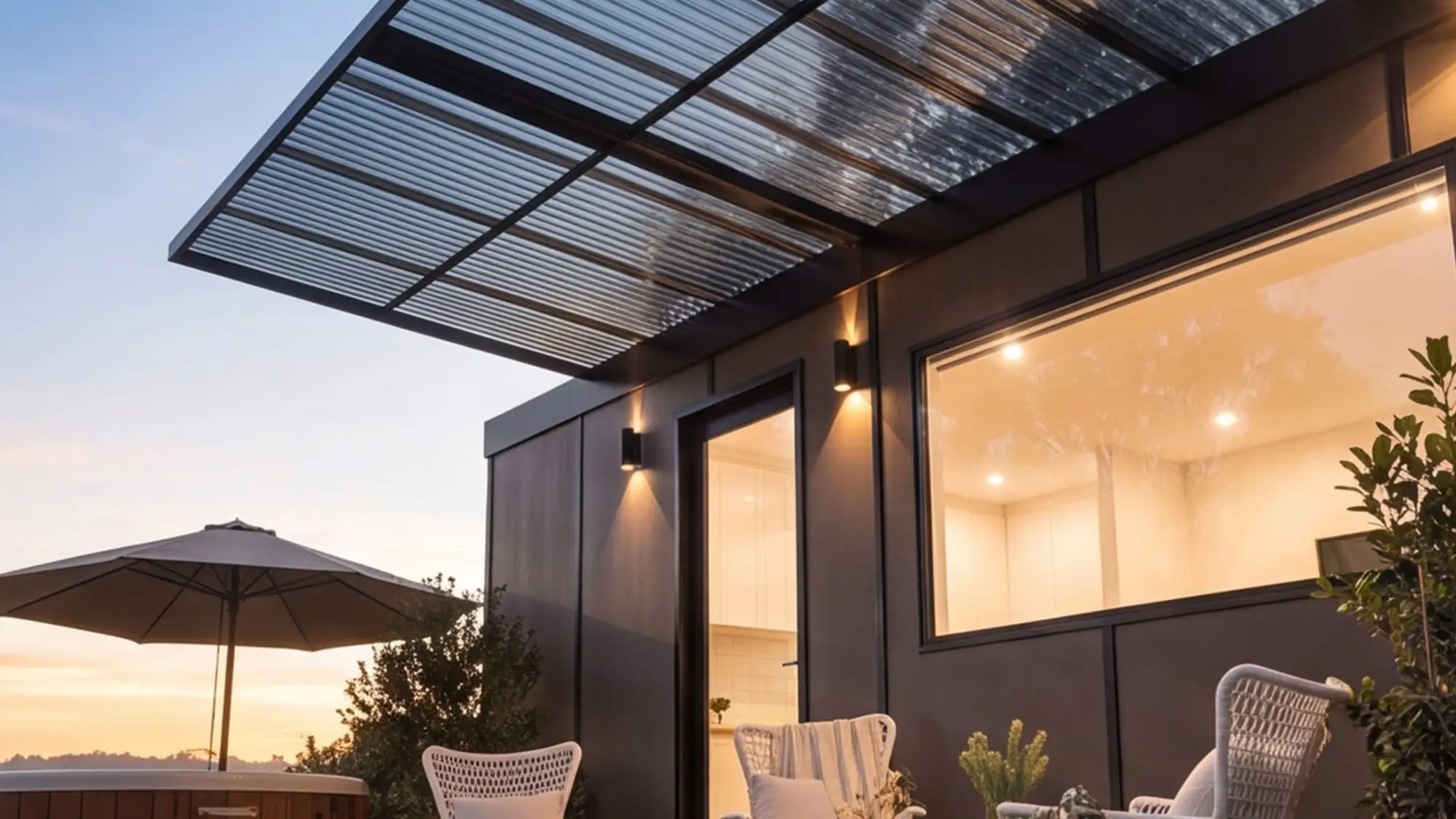
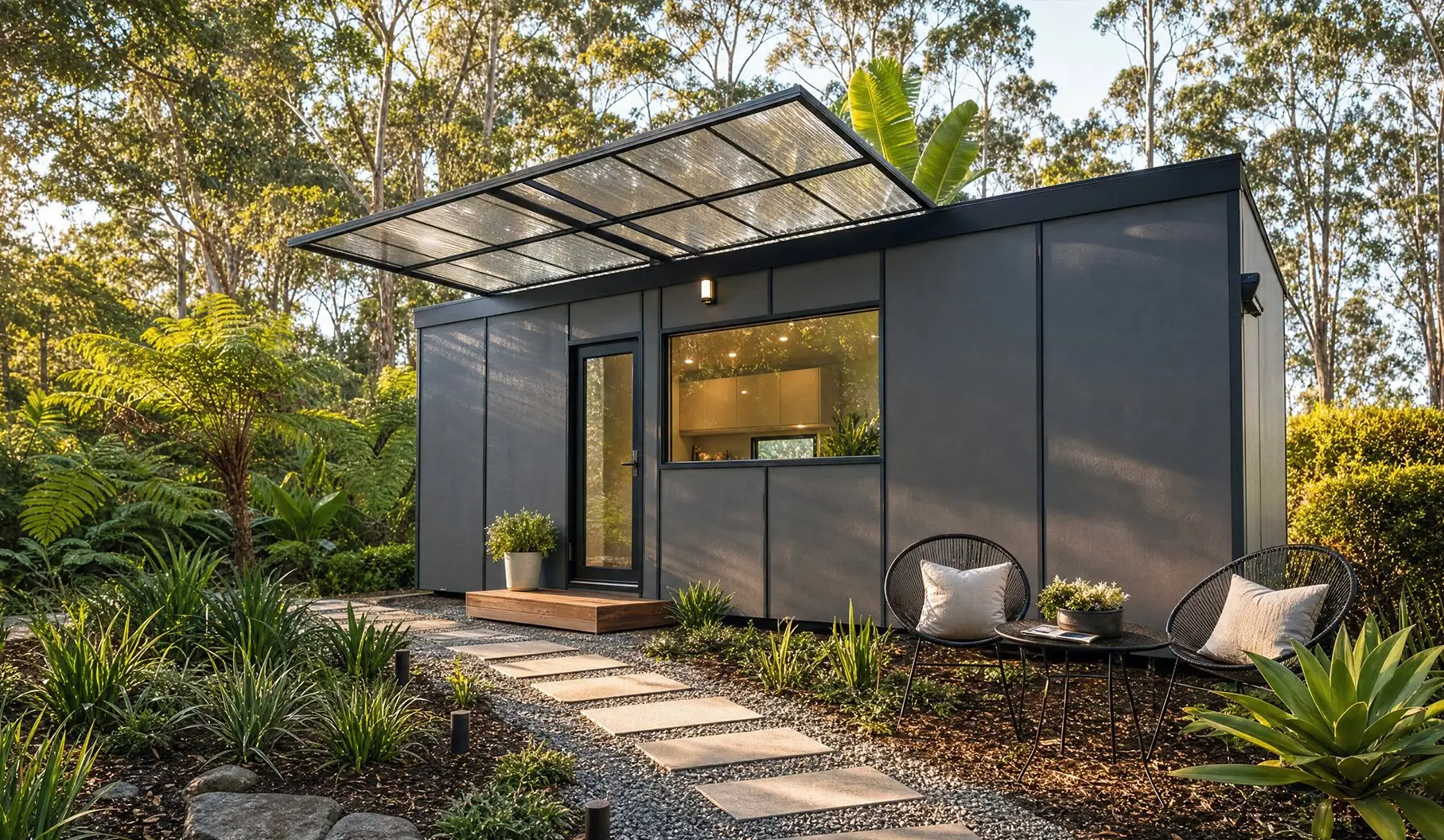
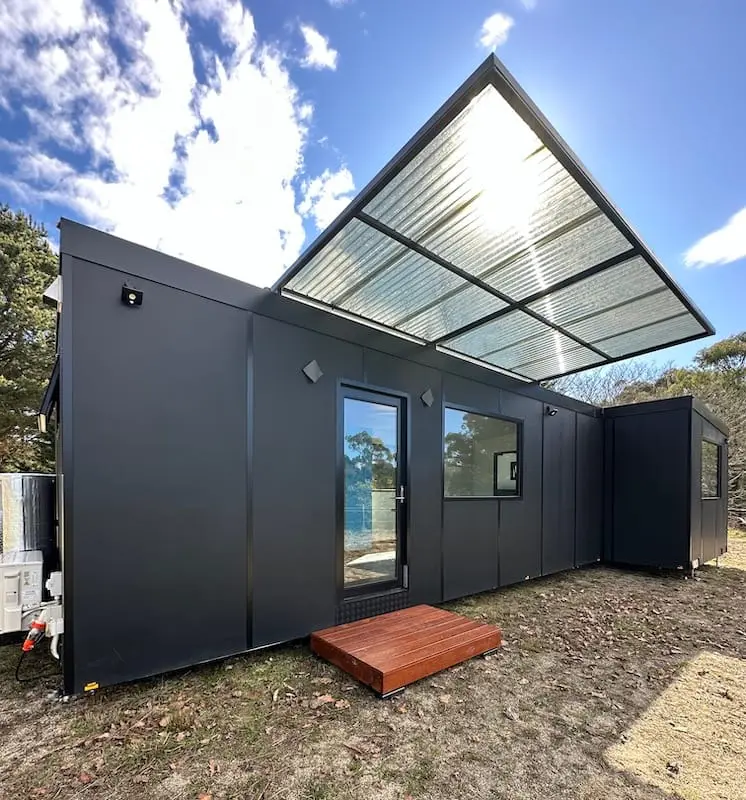
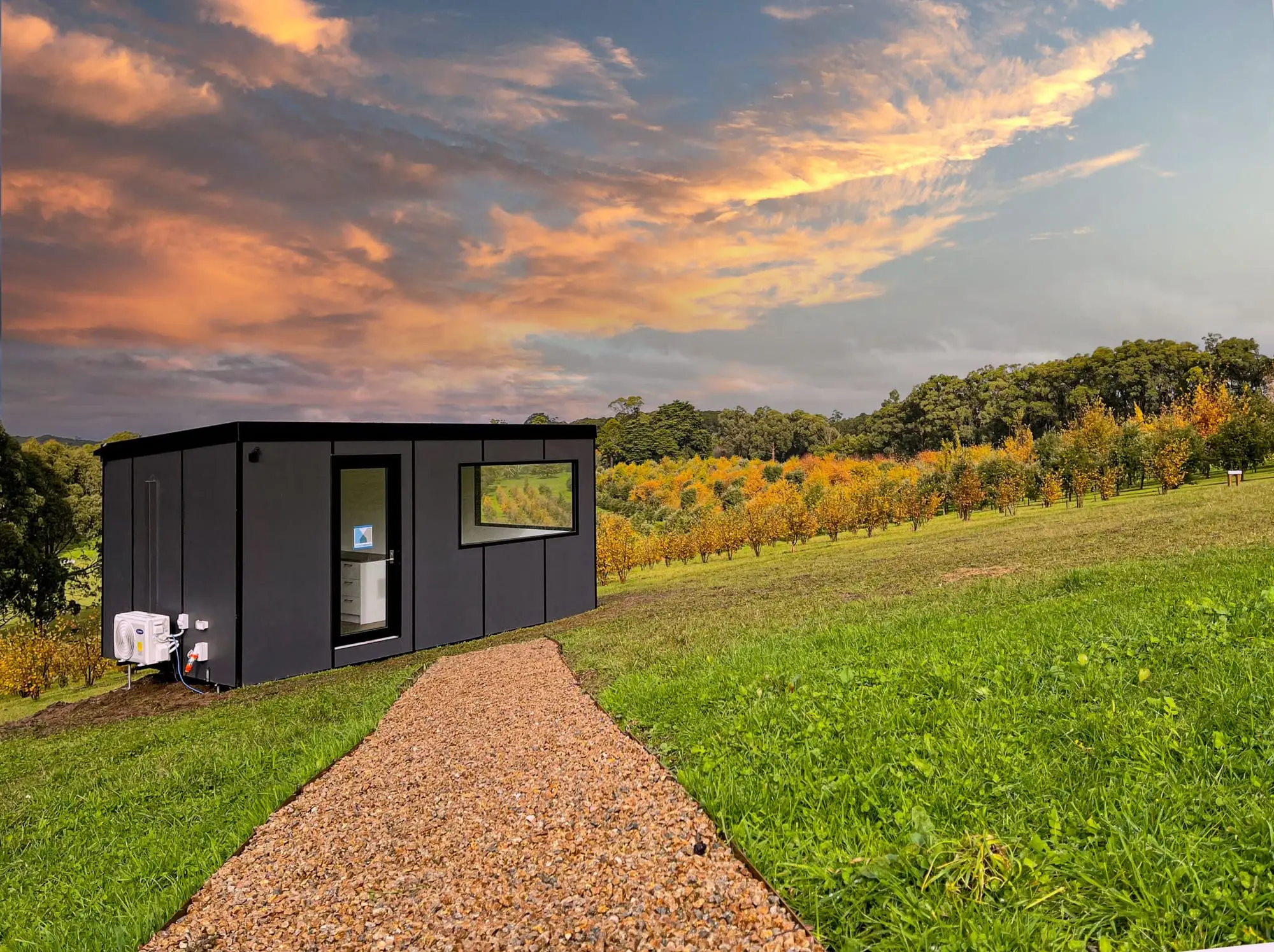
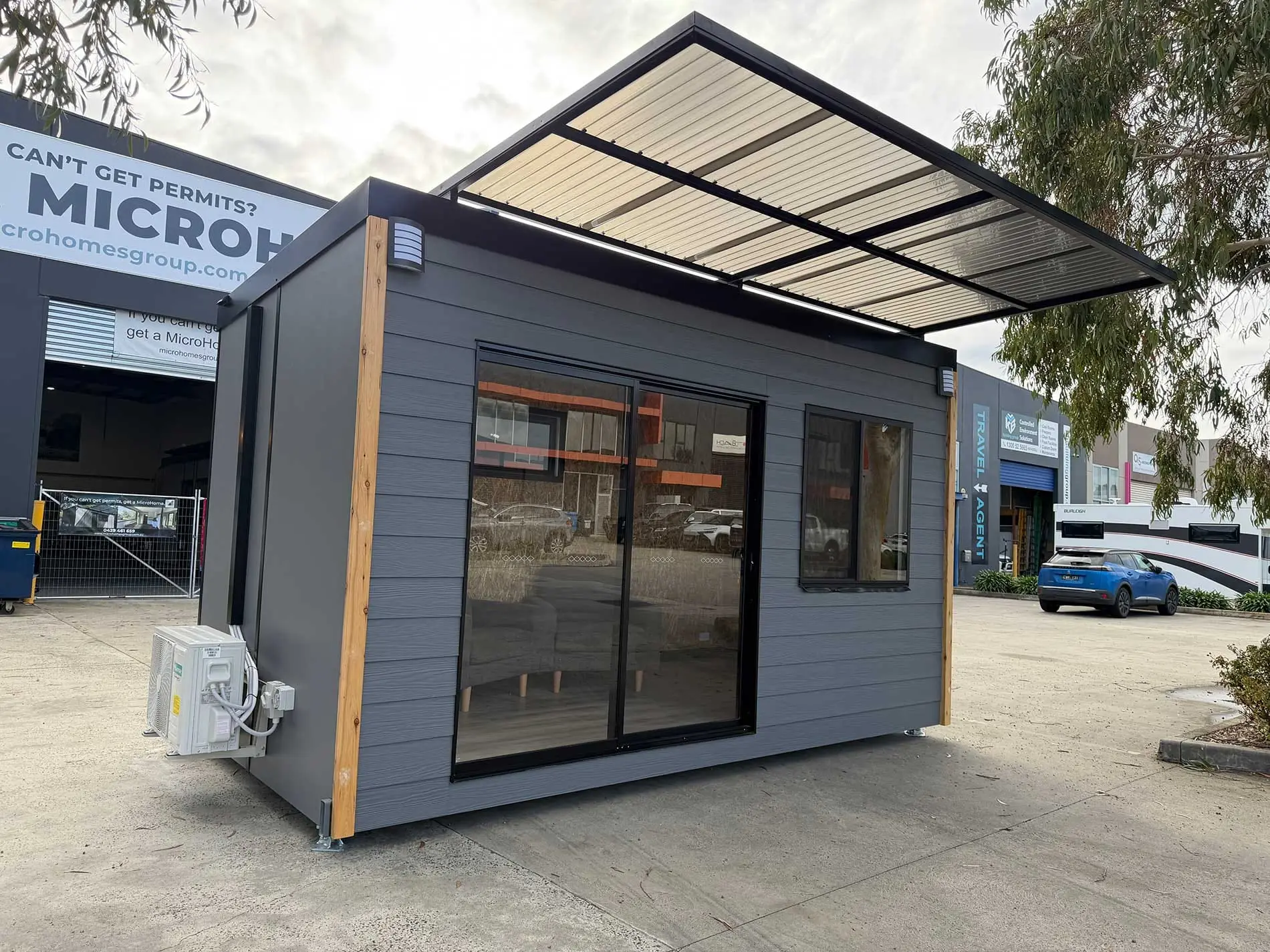
Close enough to check in. Separate enough to keep everyone’s independence.
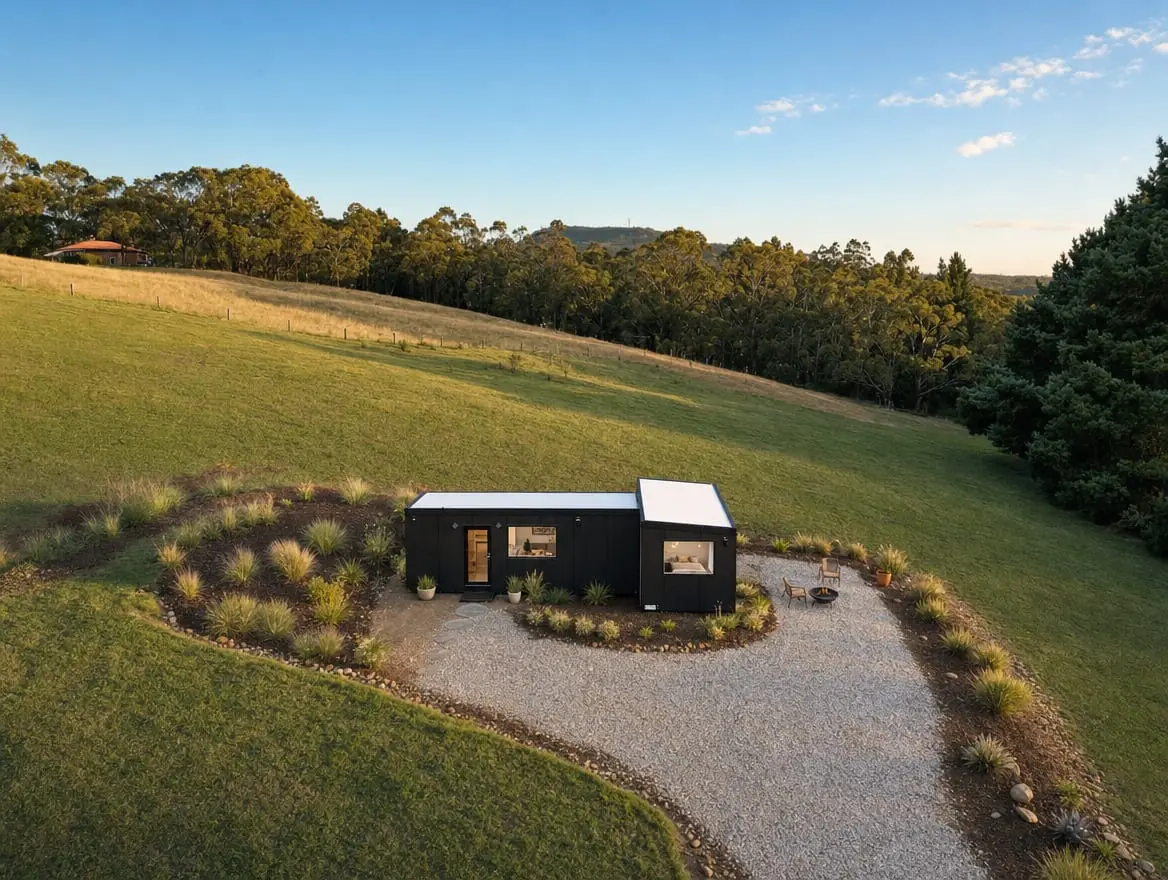
The situation
Whether it’s a parent who shouldn’t be living alone anymore, or an adult kid who can’t crack the rental market, the instinct is the same: get them close, keep them independent, and don’t make anyone feel like they’ve lost their own front door.
A granny flat does that — but it usually comes with a development application, a row of consultants, a big bill and a long wait. A MicroHome does the same job, in the backyard, in weeks instead of months — and if the need changes, it can move or move on.
This is the width that makes it their home, not a room out the back.
The worry with putting a parent out the back is that it feels like a step down. It shouldn't.
At 3.2m wide — a third more room than a standard tiny home — there’s space for a proper bathroom with laundry, a real bed, and their own furniture. Not a downsized version of a home. A home.
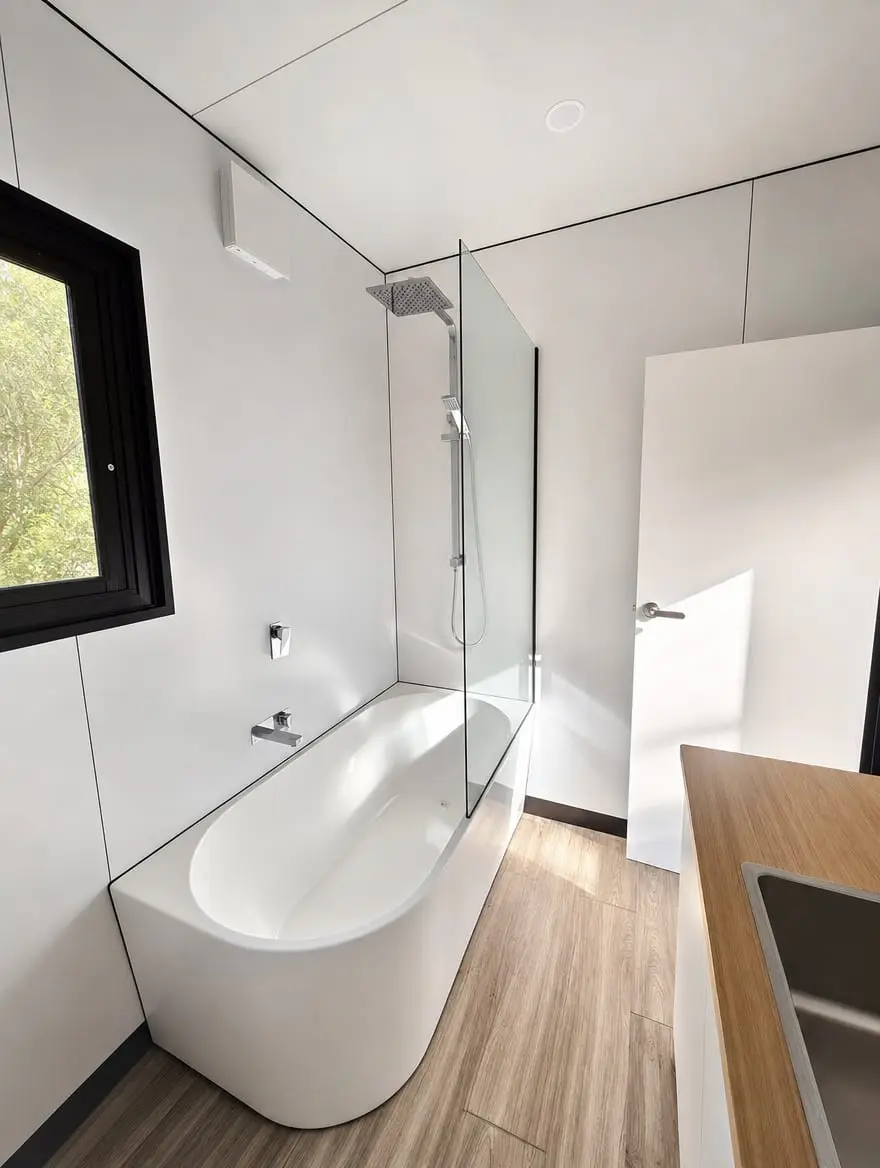
Small design decisions, stated plainly.
For an older occupant, small design decisions matter. Here is what they are.
- Close to step-free
- Our chassis sits the home about 10cm off the ground, so entry is close to step-free rather than up a flight of steps.
- Pre-wired if you want it
- Every home can be pre-wired for security and nurse-call systems. It’s an option, not a fitting we assume you want.
- BAL 29 and commercial glazing
- The structure is built to BAL 29 Bushfire Resistant standards with commercial-grade glazing, which matters if the block backs onto bush.
None of this needs to feel clinical. It’s just a home that happens to be thoughtful about the people living in it.
Skip the permanence, keep the flexibility.
The reason a lot of families choose wheels over a fixed granny flat isn’t just cost and speed — it’s optionality. A granny flat is permanent: it’s a development application now and a fixed structure forever. A MicroHome can be placed now, moved if you relocate, repurposed as a home office or teen retreat when the need passes, or sold on. You’re not locked in to one answer for one moment.
On approvals: because it’s a registered caravan — in most states treated closer to a caravan than a house, though this varies and a few states treat it differently — many backyard situations avoid the full development application a granny flat triggers, but whether yours is one of them depends on your council and zone and has to be confirmed with them before you commit.
The rules vary by council, especially where someone will be living in it full-time, so treat that as a question to answer early rather than a given. We’ll walk you through where your council is likely to land and exactly what to put to them before you commit — the answer itself comes from your council, not from us: the state planning framework is binding law, and your local council decides your specific case within it.
Straight talk, because you’ll have thought about it.
A fixed granny flat can add to your property’s value in a way a home on wheels doesn’t. What wheels give you instead is lower upfront cost, a faster start, often no development application at all — though that depends on your council and needs confirming with them — and the freedom to move or sell the home itself later.
Different trade-off, not a worse one — it depends on whether you’re buying permanence or flexibility.
What to look at next.
Tiny home vs granny flat
Cost, time, approvals and flexibility, side by side and without the sales pitch.
3.2m vs 2.4m, side by side
Why the extra width is what makes a backyard home feel like a home.
Living in one full-time
The backyard situation is usually the clearest of the three — here’s why, and what still needs checking with your council.
The Urban One Bedroom
A separate bedroom, a full bathroom with laundry — the model most families look at for a parent.
About this page. General information only, last reviewed 2026-07-21. Planning rules for movable dwellings change over time, so nothing here is legal advice — the state planning framework is binding law, and your local council decides your specific case within it. Confirm the specifics for your property before you commit to anything.
Bring the family and have a look.
The best way to know if this works for your parent — or your kid — is to stand in one together.
or call 0429 461 659