Tiny home vs granny flat: which is right for you?
The difference in one line
Both put a second, self-contained home on your property. The difference is permanence versus flexibility — and which one wins depends entirely on what you’re trying to do.
We build the one on wheels, so weigh what follows accordingly. We’ve still written it the way we’d want it written if we were the ones deciding — including the parts where the granny flat is the better answer, because there are several and pretending otherwise would be insulting.
The comparison, without the thumb on the scale.
Seven things that actually differ. The rows where the granny flat wins are in here too.
| Point of comparison | MicroHome (on wheels) | Granny flat (fixed) |
|---|---|---|
| Approvals | Often no development application — but that depends on your council and zone, and has to be confirmed with them before you commit. | Usually needs a development application — confirm the process and the cost with your council. |
| Time to move in | Twelve weeks to build, from the day your build starts. Ahead of that sits a build queue whose length varies with demand, so ask where you sit in it before you plan around a date. | Commonly 6–12+ months, and longer again once consultants are in the mix. |
| Upfront cost | Lower. The range starts at $88,000 inc GST for the Urban Multispace; the 9.0m Urban One Bedroom is $149,000 inc GST, including delivery within Melbourne metro. | Typically higher once consultants, siteworks and the build itself are all counted. |
| Adds value to your property | No. It’s a registered caravan, so it isn’t a fixed improvement to the land. | Yes. It’s a permanent structure and a fixed improvement to the land. |
| Can you move it later? | Yes — relocate it, repurpose it, or sell the home on its own. | No. It stays with the property when you sell. |
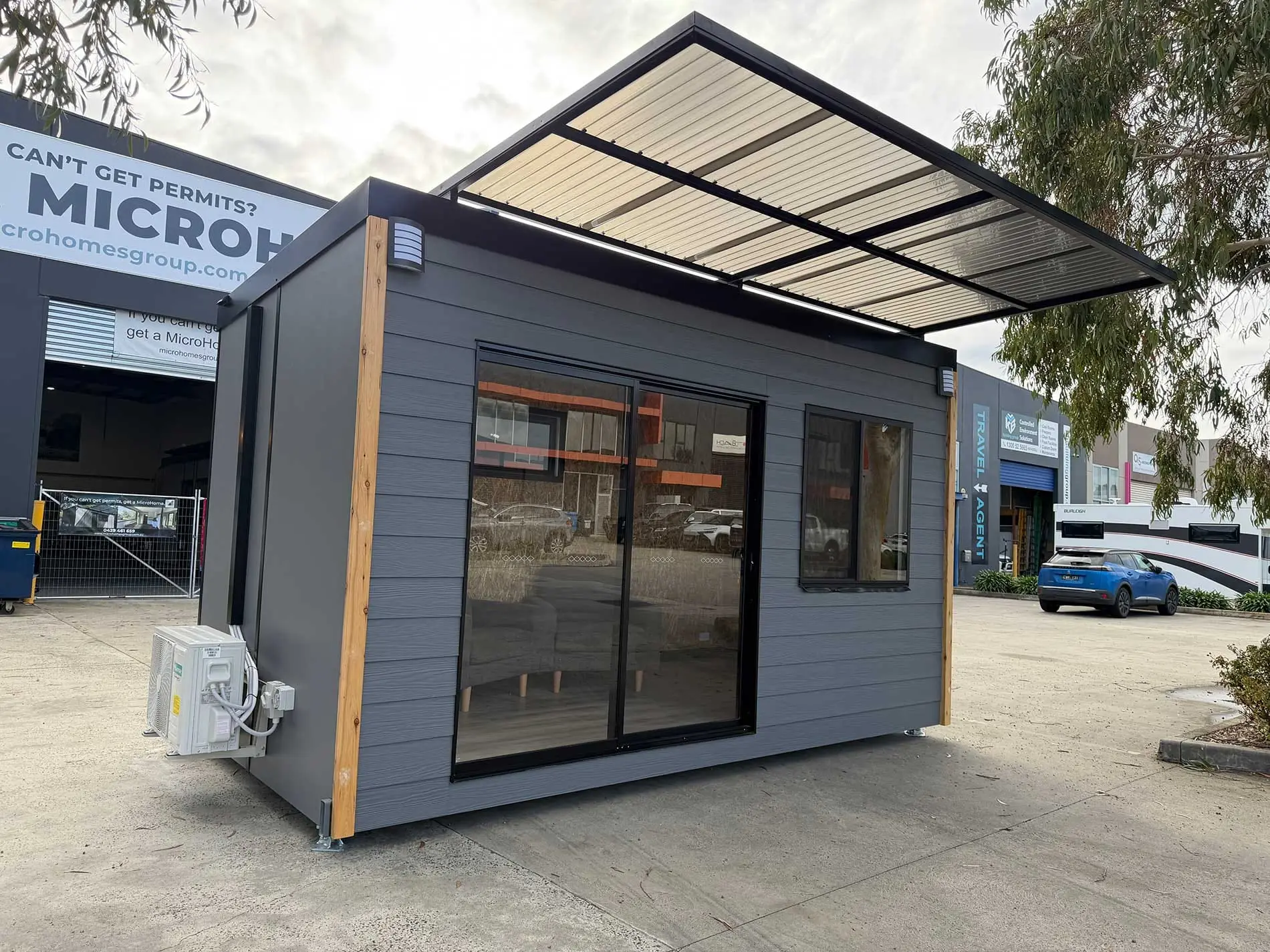
| Width and feel | 3.2m wide across the range — about a third more floor area than the 2.4m width standard-width towable homes are commonly built to. | Full building width. No towing constraint on the design at all. |
| Best for | Speed, a lower entry cost, and keeping your options open. | Permanence, and long-term value in the property itself. |
Our prices are current inc-GST list prices and exclude siteworks, services connections and delivery, which vary by block and are quoted rather than estimated. The granny flat figures are general ranges for the category, not a quote for any particular build.
Two honest cases. Read the first one properly.
You’re buying permanence.
You want a permanent structure that adds lasting value to your property, you’re not in a hurry, and you’re comfortable with the development application process and what it costs.
That’s a legitimate, sensible choice, and we’ll say so plainly: a fixed granny flat adds to what your property is worth in a way a home on wheels does not. If that uplift is the point of the exercise for you, we’re the wrong product — go and get three quotes from builders who do it well.
You’re buying optionality.
You want to move in fast, keep your capital lower, and avoid the development application where your council and zone allow it — which is a question to put to them early rather than assume.
And, crucially, you want to keep your options open. If the need might change — a parent’s situation, an adult kid moving on, a plan to relocate — wheels mean the home can change with it. You’re buying optionality, not a lesser granny flat.
This is the row people skim, and it’s the row that decides it.
A MicroHome is legally a registered caravan — in most states treated closer to a caravan than a house, though this varies and a few states treat it differently. That classification is often what lets a caravan avoid the development application a fixed granny flat triggers, though whether it holds for your block depends on your council and zone and has to be confirmed with them.
A granny flat, being a fixed structure, goes through the planning system by design — your council sets that process and can tell you what it involves. Neither route is the easy one in every case, and how long you can live in a caravan varies by council too, so check that specifically rather than assuming the two questions have the same answer.
Whichever way you lean, the answer comes from your council — not from us, and not from a builder’s website. What we can do is tell you which conversation you’re about to have, and hand you the questions that get a useful answer out of it. The state planning framework is binding law, and your local council decides your specific case within it.
A granny flat can be any width. A home on wheels usually can’t.
This is the comparison people get wrong in the other direction. A granny flat has no towing constraint, so it can be built to whatever width the block and the planning rules allow. That’s a real advantage and we’re not going to pretend it isn’t.
What’s worth knowing is that not all homes on wheels are the same width either. Standard-width towable homes are commonly 2.4m. Ours are 3.2m — about a third more floor area, and the difference between a home on wheels that competes with a granny flat on how it actually lives, and one that doesn’t.
What to look at next.
The honest answer on approvals
What actually decides whether you can live in one, and the questions to put to your council.
Bringing a parent closer
The backyard situation in full — the most common reason people run this comparison.
3.2m vs 2.4m, side by side
What the extra 0.8 metres actually changes about living in one.
How people pay for these
What lenders make of a home on wheels, and the ways buyers typically fund one.
About this page. General information only, last reviewed 2026-07-21. Planning rules for movable dwellings change over time, so nothing here is legal advice — the state planning framework is binding law, and your local council decides your specific case within it. Our prices are current list prices and exclude siteworks and delivery. Confirm the specifics for your property before you commit to anything.
Still not sure which one you’re buying?
Tell us about your block and what you're trying to solve. If a granny flat is the better answer for your situation, we'll tell you that — it costs us a sale and saves you from buying the wrong product.
or call 0429 461 659