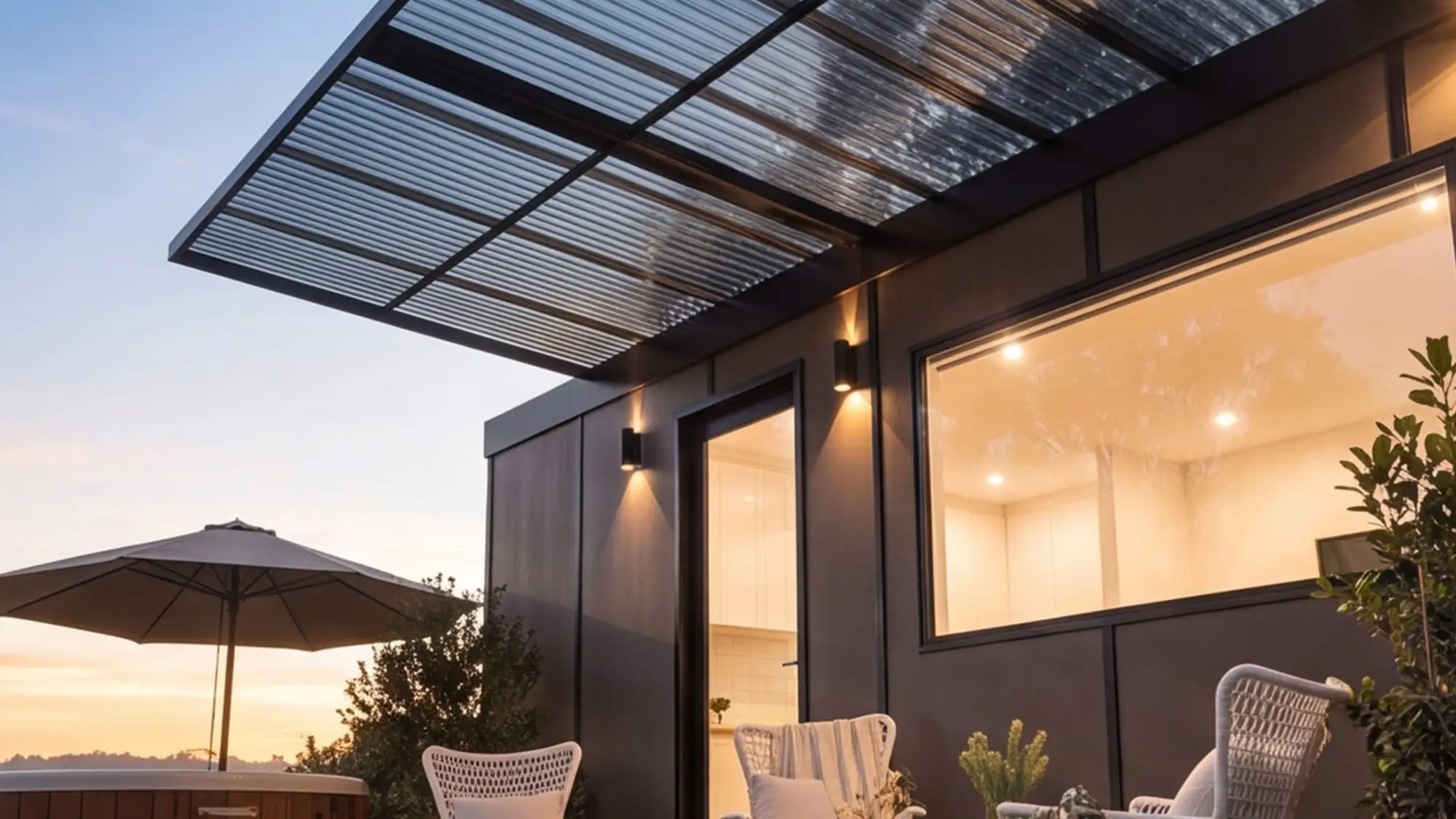
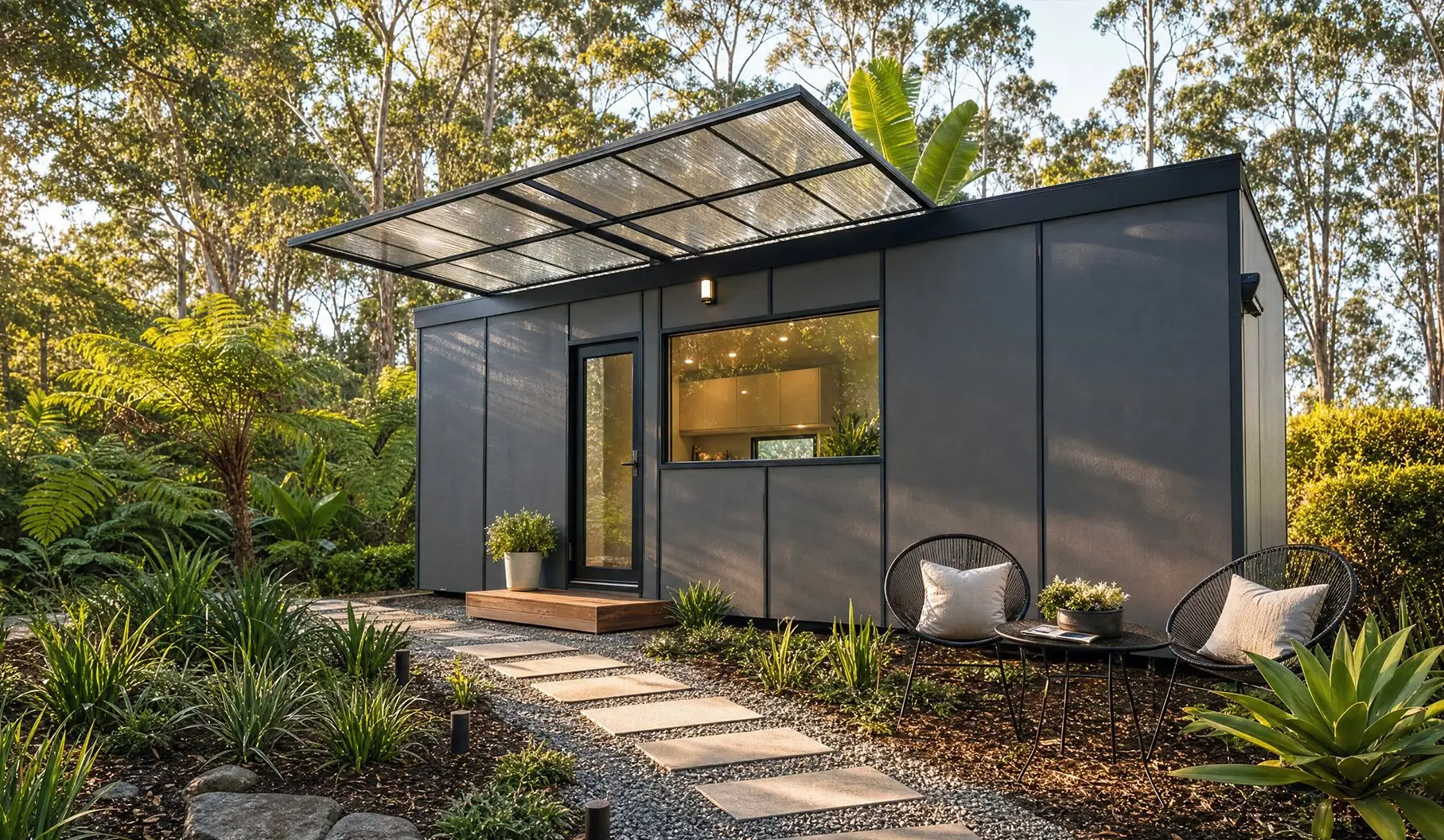
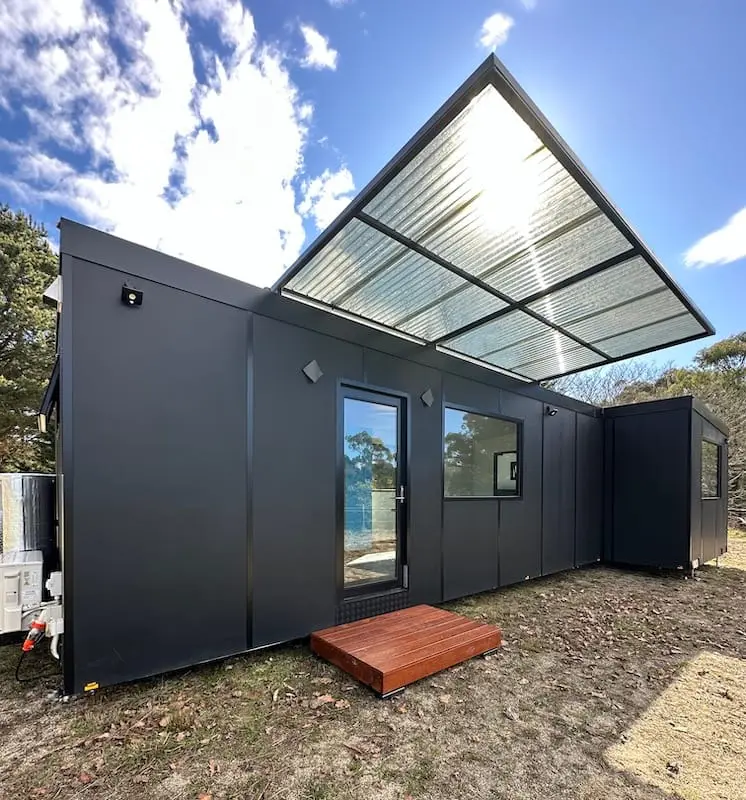
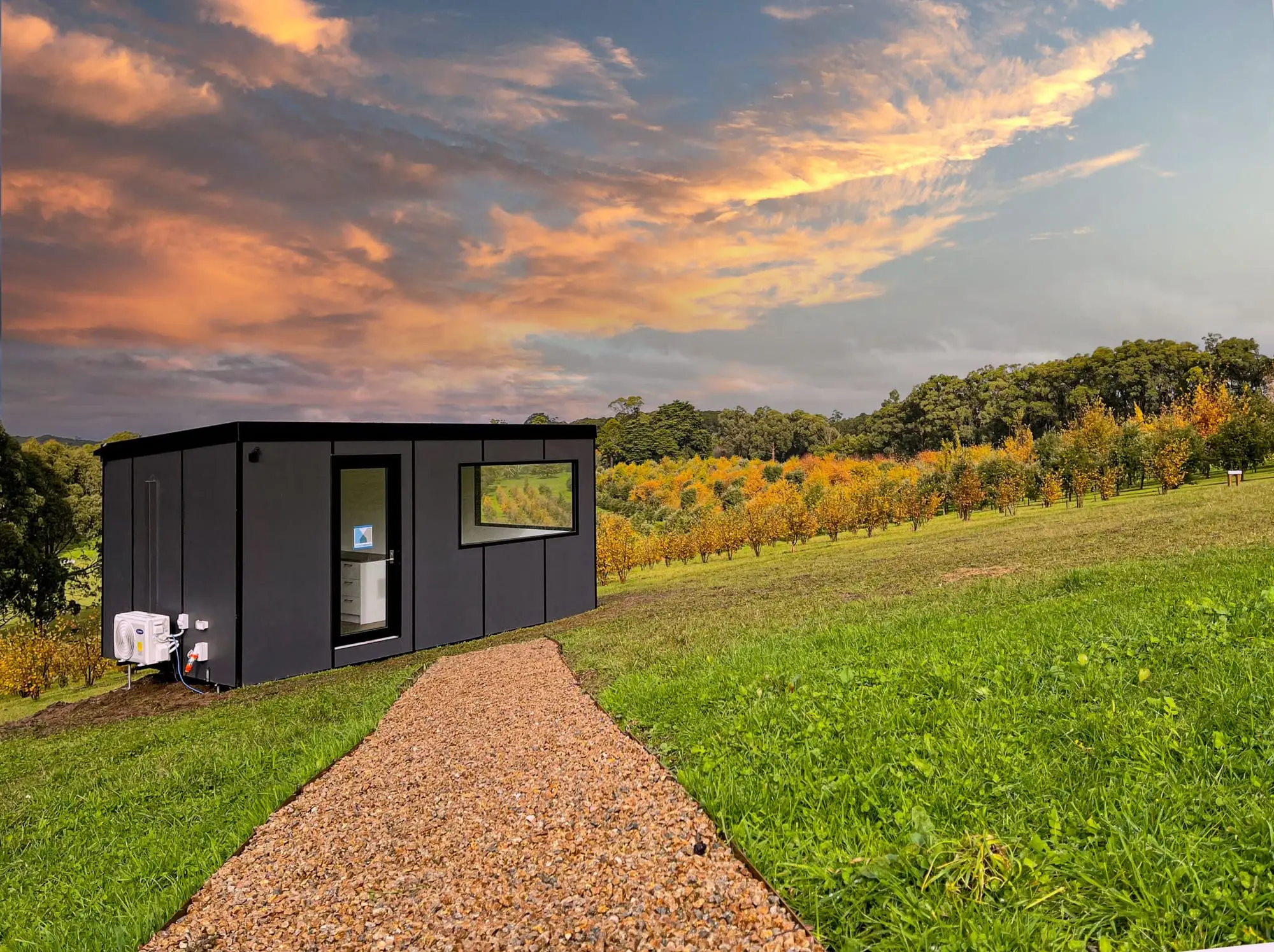
A home for the block that hasn’t got a power pole
What off-grid means here
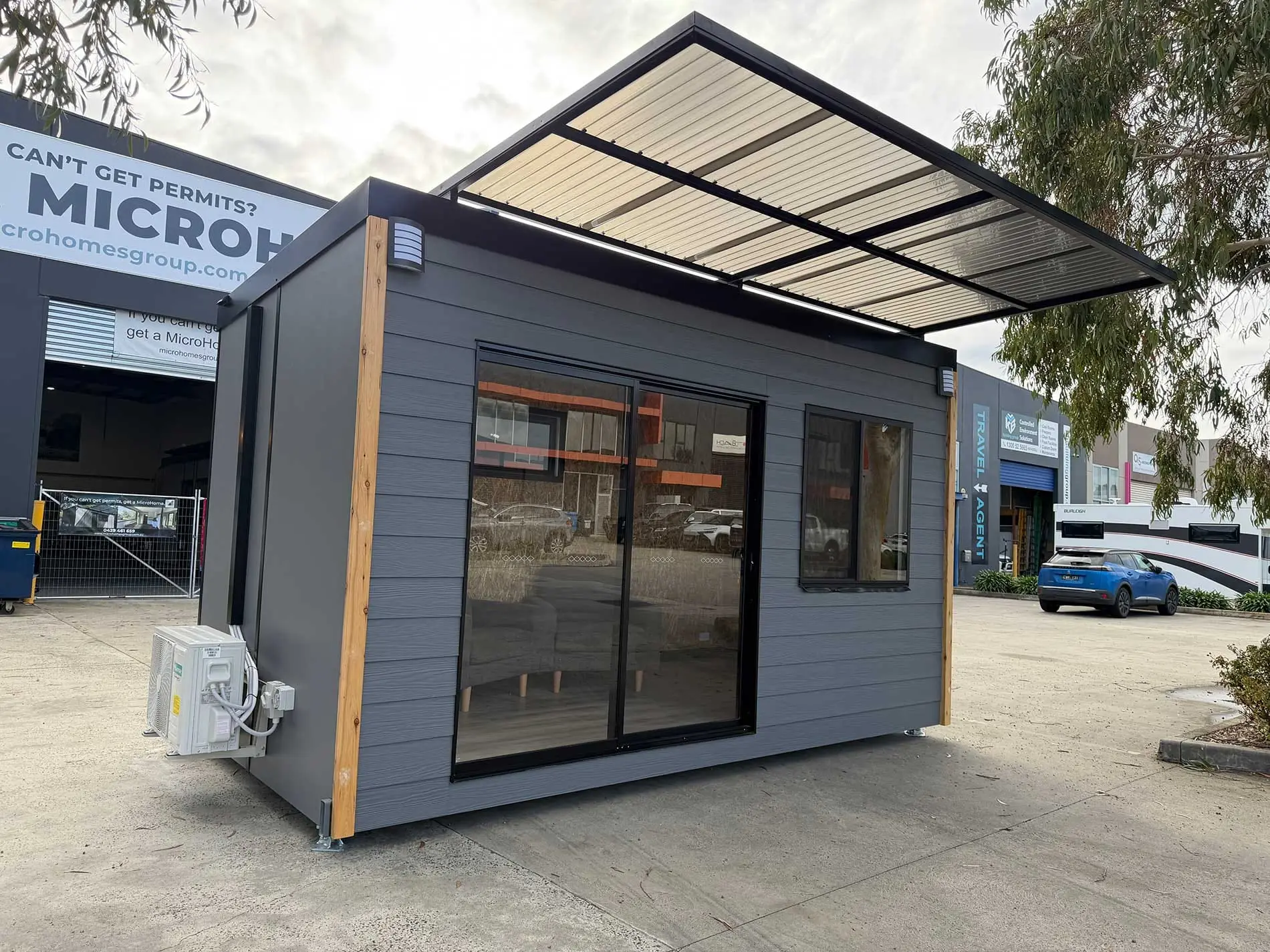
Off-grid isn’t a different kind of MicroHome. It’s the same 3.2m-wide home, with its own power, water and waste instead of a connection to somebody else’s.
That matters because the usual trade in this category is that going off-grid means going without — a composting toilet, a camp shower, an extension lead to the house. It doesn’t have to. The point of doing the engineering properly is that the home behaves like a home whether or not there is a pole at the boundary.
Three quite different reasons.
Most people who ask about off-grid aren't making a statement about self-sufficiency. They've got a block with nothing at the boundary and a quote from a utility that made their eyes water.
A block with no services at the boundary
Rural and bush blocks where connecting power and water is a five-figure quote in its own right, if it is possible at all. Going self-sufficient can be the cheaper and faster path — though what your council needs to see is still a separate question to put to them.
A second dwelling a long way from the house
Down the back paddock, over the ridge, past the point where running a trench is worth it. Self-sufficiency turns a hard site into an ordinary one.
Wanting to be less tethered
Some owners simply want lower bills and fewer connections to worry about, on a block that has town services available. That is a legitimate reason and we build for it too.
Three services, three separate problems.
They get lumped together as one word. They aren't one problem, and the one that catches people out is almost never the one they were worried about.
- 01
Power
A solar and battery package sized to the home and to how you actually use it, so the fridge, the induction cooktop and the reverse-cycle system all still work on a grey week in July. Sizing is a conversation about your block and your habits, not a number off a price list.
- 02
Water
Rainwater capture and on-board storage, with pumping and filtration. On a block with no town water this is the difference between a home and a campsite, and the sizing depends on your roof area and your rainfall as much as on the home.
- 03
Waste
Solar is the easy part, and water is just a tank and a pump. Sewage is the tricky one, and it is the one we have covered: our sewage storage system holds up to 700 flushes before it needs emptying, and a pump-out truck can do that for typically a couple of hundred dollars every other month. It is a small price for a real flushing toilet where flushing toilets do not normally belong. How your council treats waste on a block with no sewer is still worth raising with them early rather than at the end.
We don’t publish system sizes here, because the honest sizing depends on your block, your roof, your rainfall and how you live. A number on a web page would be a guess dressed up as a specification.
What going off-grid doesn't do.
You will hear off-grid sold as a way around the rules. It isn’t one. Where a home can be placed, and how long anyone can live in it, is a planning question your local council decides, and being self-sufficient does not change who decides it.
What it can genuinely change is how the home connects to services. On a block with town services, a MicroHome plugs in through a service post rather than a permanent connection. Off-grid, there is no mains connection at all to plug into. Whether anything about that needs your council’s approval is for your council to say, so confirm it with them before you plan around it.
And on-site waste treatment usually has an approval pathway of its own, which varies by council, so ask about that one specifically rather than assuming it travels with the rest.
What to look at next.
What makes a MicroHome different
Width, comforts and engineering — in the order that actually matters.
Off-grid systems to size before you buy
A checklist for power, water, wastewater and backup, and the questions for a quote.
Downsizing or making a tree change
The vacant-land situation, and what to sort out before you buy the block.
Built to BAL 29
What building to BAL 29 covers — relevant to most of the blocks this page is about.
The range
Every model can be configured off-grid. Footprints, floor areas and inclusions.
About this page. General information only, last reviewed 2026-07-21. Off-grid system sizing is specified per site and is not stated here. Planning rules for movable dwellings, and the approval pathway for on-site waste treatment, change over time — the state planning framework is binding law, and your local council decides your specific case within it.
Tell us about the block.
Send us where it is, what's at the boundary and how you plan to use the home. We'll tell you what an off-grid set-up would need to cover, and what you should be asking your council.
or call 0429 461 659